🎮 Original Game Design & Systems Engineering
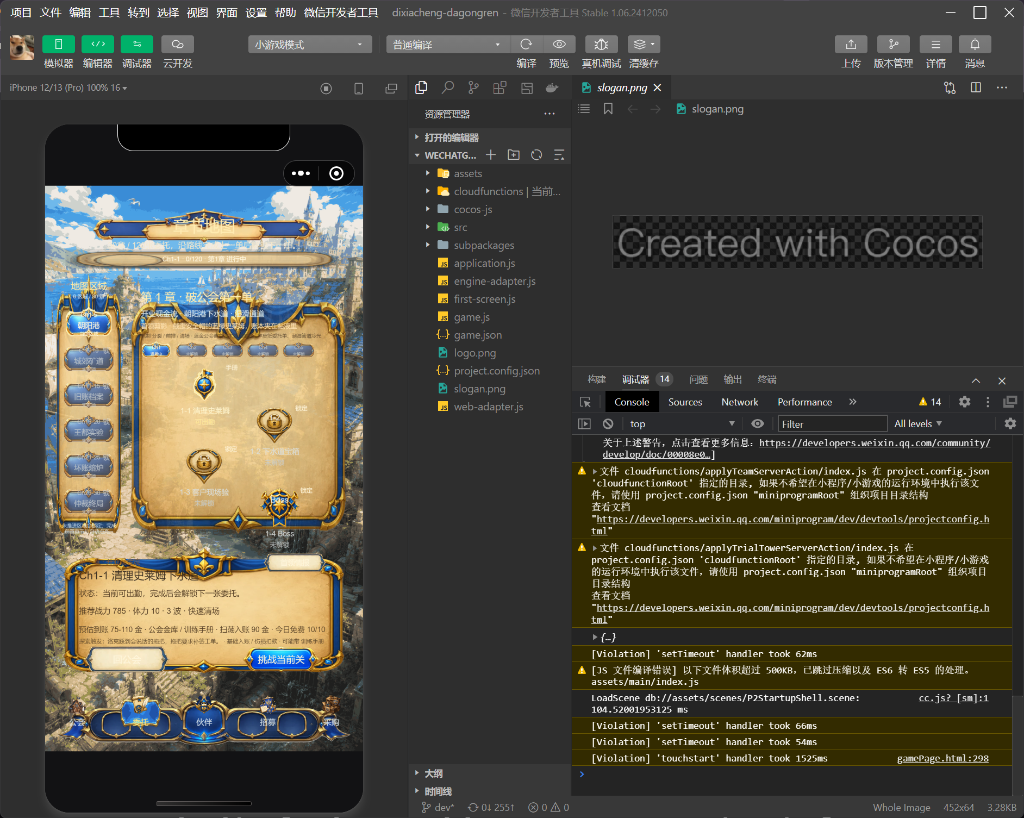
The Project Concept: 《这个公会正在还债》 (working title: Dungeon Workers) is a light RPG WeChat Mini Game. The player acts as the manager of a bankrupt adventurer guild, hiring quirky, flawed mercenaries (e.g. Greedy Thieves, Cowardly Heroes) to dispatch on dungeon contracts, handle comedic text events, collect rewards, and deduct salaries to pay off public guild debts.
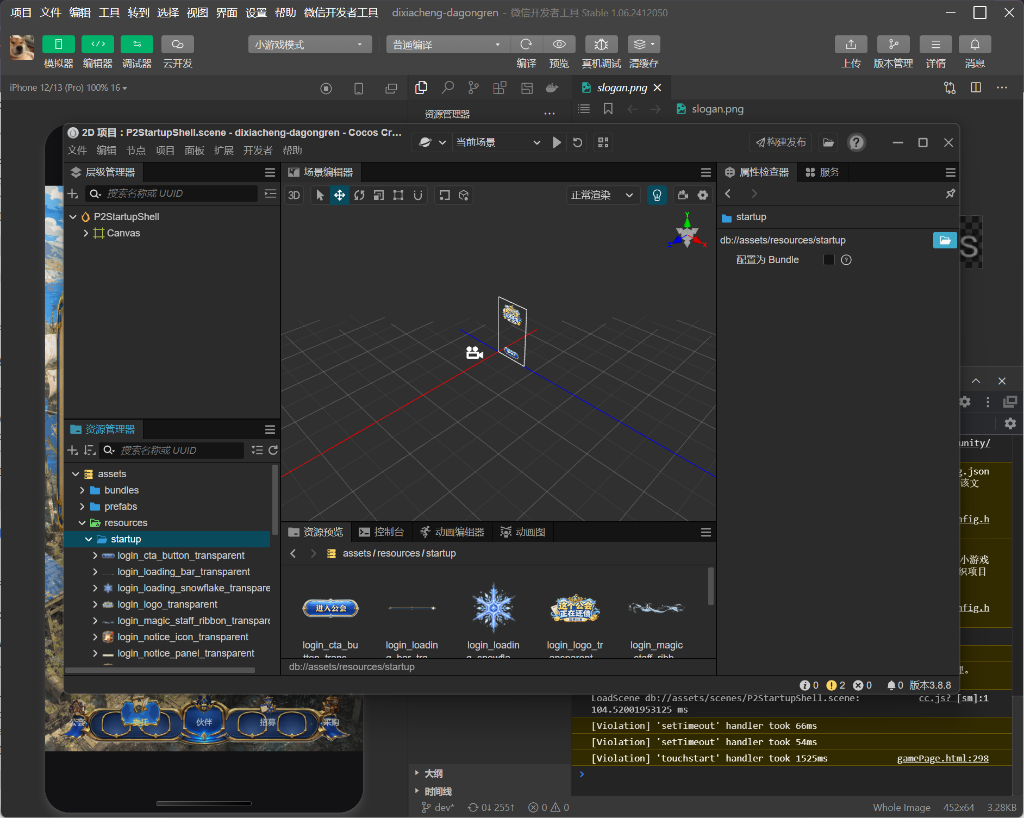
Engineering Decoupled Boundaries (Managing Asset Coordinates): One major challenge in Cocos Creator development is coordinate layout fine-tuning, which is tedious to hardcode. I designed a clean **Core-Presentation Decoupled Architecture**:
- Core Game Loop (TypeScript): Holds data schemas, event routing systems, combat simulators, and gacha mathematical tables. It remains 100% independent of asset positions.
- Presentation (Cocos Prefabs): Isolates sprite coordinates, button margins, and UI node hierarchies. This separation allowed me to focus on building the complex backend state machines and configuration pipelines, leaving visual asset placement to scene editors and design managers without touching the code.
WeChat Mini Game Platform Optimizations:
Deploying a rich RPG to WeChat requires resolving severe size limitations.
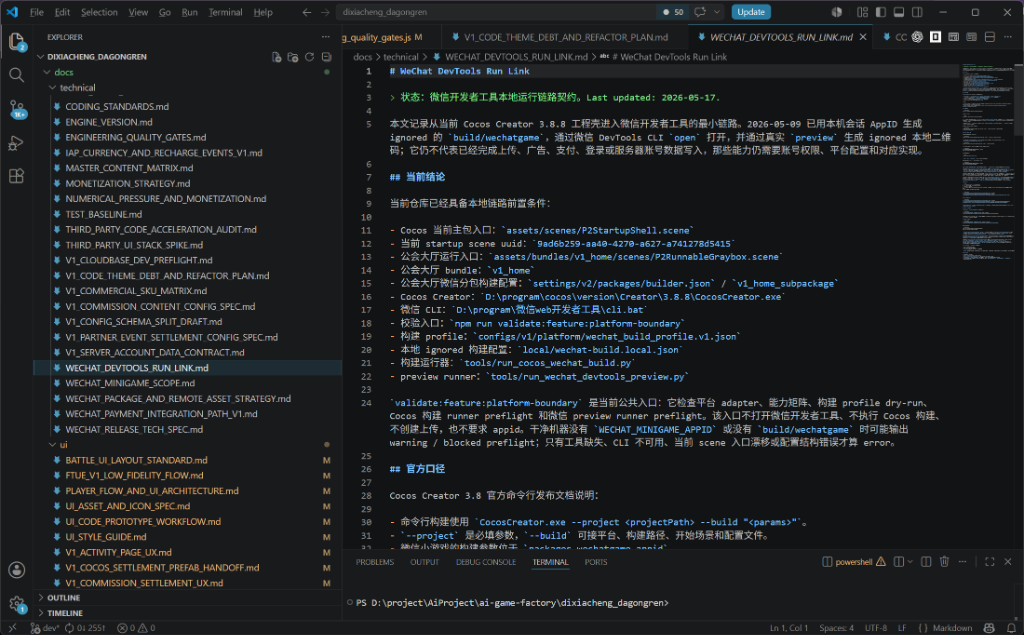
First, I optimized startup speed to satisfy WeChat's strict 4MB initial package threshold by separating the runtime into a minimal launch shell and lazy-loading the game package (v1_home sub-package) via remote asset bundles.
Second, I linked monetized options (rewarded ads, monthly sub cards) with serverless cloud functions (applyCommercialServerAction) running on WeChat CloudBase to guarantee secure data ledger mutations.
📂 Deployed Game Repository
The core codebase separates logic engines from platform adapters and schema configurators:
│ ├── core/ ← Decoupled game loop logic
│ │ ├── PartnerSystem.ts ← Mercenary status
│ │ ├── SalarySystem.ts ← Invoice settlement
│ │ └── EventSystem.ts ← Random adventure state
│ ├── presentation/ ← Screen router configs
│ └── platform/ ← WeChat Mini Game SDK contracts
cloudfunctions/ ← Serverless CloudBase billing APIs
configs/resources/ ← JSON databases (monsters, events)
├── package.json ← Script pipeline config
└── tsconfig.json ← Strict TS configuration